


Blog
Complete Guide to Buying Food Processing Equipment from China
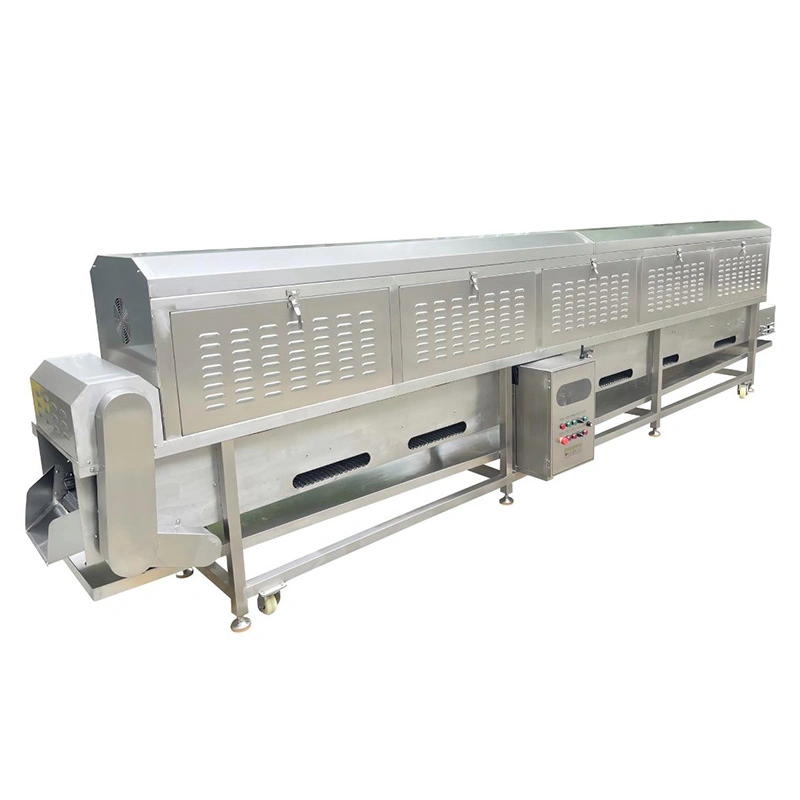
Many global food manufacturers have adopted the practice of sourcing food processing equipment in China, ranging from small startup companies to large industrial processors. China has created a complete food manufacturing ecosystem over the last decade. This includes vegetable processing lines and equipment, meat cutting machines, fruit peeling systems, seafood processing machinery, frying systems and packaging solutions.
It is important to note that purchasing industrial equipment abroad does not only involve comparing prices. Understanding technical specifications, production needs, material standards and logistics planning are all important. Buyers who buy equipment without proper evaluation may later experience issues like capacity mismatches, unstable performance or unexpected installation costs.
This guide will explain how international buyers can evaluate and buy food processing equipment from China in an engineering-focused and practical way.
Understanding the role of Chinese food machinery in global supply chains
China is a major manufacturer of food processing equipment, thanks to its integrated supply chains, engineering capabilities, and scalability. The production and export of many types of machinery is global. These range from simple single-function machines to fully automated manufacturing lines.
The machines are used for:
Washing and cutting vegetables
Meat processing plants
Fruit peeling lines and juice production lines
Seafood cleaning systems and freezing systems
Production facilities for snack food and frying
Catering and central kitchen operations
The availability of standalone machines as well as complete integrated production systems is one of the biggest advantages of sourcing products from China. The flexibility of the setups can be tailored to suit the production scale and budget.
Determining your production requirements before purchasing
Uncertain technical requirements are the most common problem in international procurement. The production target should be defined before selecting equipment. Included in this are the raw material type and final product format. Also, daily output and processing flow.
A line of processing designed for leafy vegetables cannot be used directly for root vegetable without modifications. The same applies to meat cutting equipment designed for chilled meat. It may not work properly when used with frozen blocks, unless it is specifically designed for this purpose.
It is important to understand product characteristics, such as moisture content and hardness. Also, the size variations, temperature sensitivity, and size variation are all factors that must be considered when selecting machinery configurations.
Evaluation of machine specifications and technical standards
The next step after defining production requirements is to evaluate technical parameters. Typical parameters include the following: capacity per hour; motor power; cutting or processing method; material grade and automation level.
In general, stainless steel is used in areas that come into contact with food in machinery sold overseas. Due to its high corrosion resistance and hygienic properties, stainless steel 304 is often used in environments with wet conditions or high temperatures.
The structural design of the machine, its ease of cleaning, the safety protection system, and compatibility with current factory layouts are also important. The machines should not only be able to meet the production needs but also integrate into the workflow, without causing bottlenecks.
Understanding Machine Categories and System Integration
Rarely is food processing equipment used alone. Machines are used in industrial applications as part of an ongoing production line.
A vegetable processing system, for example, may include washing equipment as well as sorting conveyors and cutting machines. It could also include blanching systems and packaging units. A meat processing line can include stages such as grinding, mixing and forming, cooking and vacuum packaging.
Buyers in China have the choice of purchasing individual machines or integrated systems. Integrated systems are more efficient and consistent when the production volume is large. While standalone machines provide flexibility, they also offer greater efficiency.
Quality Control and Manufacturing Issues
International procurement is a major factor in ensuring quality consistency. Buyers must pay attention to not only the external appearance, but also internal structure, welding, electrical components, mechanical stability, and structural stability.
Small engineering details, such as motor configuration, conveyor alignment and seal design, can have a significant impact on the long-term reliability of industrial food machinery. Stable structural engineering is required for machines that operate in wet environments, or are continuously loaded.
Also, it is important to determine if the design of the machine facilitates easy maintenance. Equipment that is hard to maintain or clean can pose long-term challenges for food production environments.
Logistics, installation, and after-delivery considerations
Planning is essential when shipping industrial equipment overseas. Machines need to be packed properly, protected from moisture and fixed securely for long distance transport. Equipment may be shipped in fully assembled sections or as modular units, depending on the machine’s size.
Planning the installation is also important. Before shipment, buyers should confirm the floor space required, power supply compatibility and water and drainage system requirements. Installation issues are often the cause of production problems, not machine quality.
To ensure long-term performance, it is important to provide operators with basic training in machine operation, cleaning and maintenance procedures.
Common mistakes in buying food machinery from China
A common mistake is to select equipment solely on the basis of price, without considering production compatibility. Underestimating the importance automation level can lead to excessive labor costs and complex systems.
Some buyers fail to take into account future scalability. If production increases, a machine that meets current needs could become a bottleneck. It is more cost-effective to plan for moderate capacity expansion than to replace equipment frequently.
A structured approach is required to purchase food processing equipment in China. This goes beyond a simple cost comparison. A successful procurement process relies on clear production planning and accurate technical evaluation.
If these factors are taken into consideration, sourcing food processing equipment from China will provide access to a range of reliable solutions that can be scaled up or down for different levels in industrial production.
FAQs
- What should be confirmed before buying food processing equipment from China?
Buyers should clearly define raw materials, production capacity, final product specifications, and factory layout before selecting equipment.
- Is stainless steel 304 always used in food machinery from China?
It is commonly used in food-contact areas, but specifications may vary depending on machine type and processing conditions. Buyers should always confirm material details.
- Can machines be customized for different production needs?
Yes, many food processing machines can be customized based on product type, capacity requirements, and factory integration needs.
#FoodProcessingEquipment
#ChinaFoodMachinery
#IndustrialFoodProcessing
#FoodProductionLine
#FoodFactoryEquipment