


Blog
What to Check Before Buying a Vegetable Washing Machine
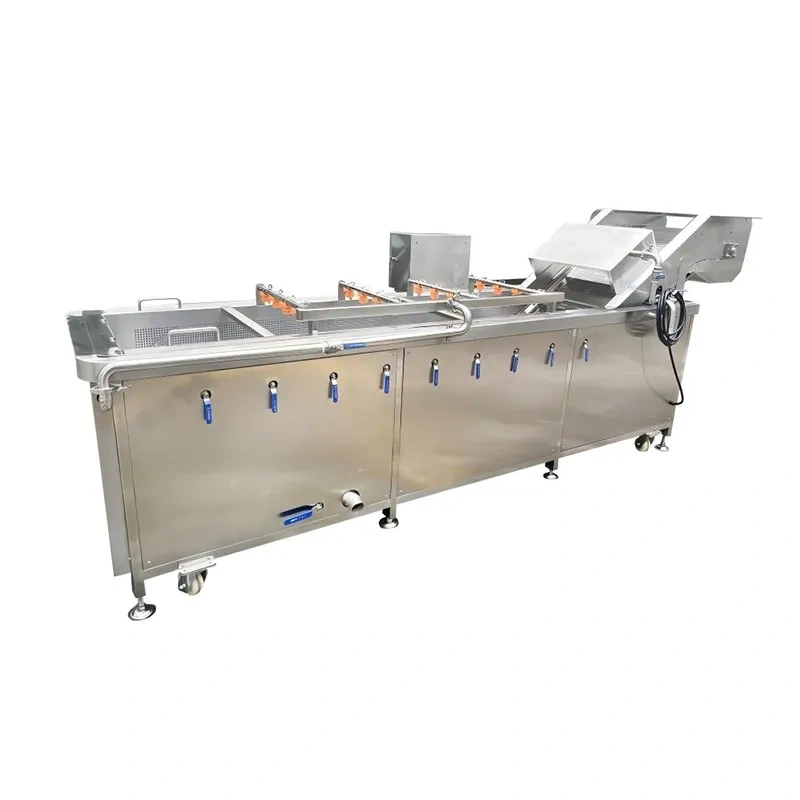
Washing is a critical first step in modern vegetable processing. The quality of the washing process directly impacts the shelf life and performance of the downstream processing, whether the final product is frozen vegetables, fresh-cut vegetables or meal kits. In order to choose the best vegetable washing machine, it is important to compare more than just price and capacity.
Vegetable washing machines are designed to remove dirt, sand and pesticide residues from raw vegetables using water circulation, bubble agitation or spray systems. Nevertheless, different vegetables as well as production environments will require different washing methods. A machine designed for leafy vegetables may not work well with root vegetables, or on high-capacity production lines.
This article describes the main technical and operational aspects that should be considered before buying a vegetable washer for food factory usage.
Understanding Raw Material Type
First, you need to determine the type of vegetable that will be processed. The structure, density and surface properties of different raw materials will affect how they behave during washing.
To avoid damaging leafy vegetables like lettuce, spinach and cabbage, they should be handled gently. To ensure that these materials are cleaned without tearing, or bruising, they are washed with bubble washing systems and water circulation.
The soil adheres more strongly to root vegetables like potatoes, carrots and radishes. Roller washing or more powerful spray systems are better suited in these situations.
To handle the different product categories in the same production environment, it is often necessary to use multi-stage or adjustable washing systems.
Evaluation of Washing Technology and Cleaning Method
The cleaning principle used in all vegetable washing machines is different. Most common are bubble washing, spraying, brushing, and multi-stage systems.
Air injection is used at the bottom to create water turbulence. This method is popular because it offers gentle cleaning, while also effectively separating dirt from the surface of vegetables.
Spray washing uses high-pressure jets of water to remove dirt. Spray washing is used after initial soaking and bubble cleaning.
Brush washing is used to remove stubborn dirt from vegetables that are harder. It must, however, be controlled carefully to avoid damaging delicate items.
Multi-stage systems that combine different methods are used in industrial applications to improve both product safety and efficiency.
Material Construction and Hygiene Design
The material selection is critical in the design of food machinery. This is especially true for equipment that works continuously in humid environments. Due to its corrosion resistance, stainless steel is often used.
Surfaces that come into contact with food should be easy to clean and free of residue. Surfaces with poor surface finishes can increase the risk of contamination and make cleaning more difficult during production shifts.
The drainage design is important. A washing machine that is designed well should have a fast water discharge and easy sediment removal. It should also be able to clean efficiently between production cycles. Over time, machines that retain water and debris can cause hygiene problems.
Capacity and production line matching
The correct capacity is a practical consideration that cannot be overlooked. A machine too small may cause bottlenecks on the production line. An oversized machine can lead to excessive energy and water usage.
It is better to evaluate capacity based on the hourly output than relying on daily estimates. Also, it is important to take into account upstream and downstream process. To maintain a continuous flow, the washing speed must match that of cutting, peeling or packaging.
Washing machines are integrated into large processing plants, often as part of complete vegetable processing lines. Conveyors and transfer systems link each stage, ensuring efficiency.
Water Consumption and Recycling System
In food processing, water usage has become increasingly important. Modern vegetable washing systems include water filtration systems and circulation systems that reduce water usage and improve efficiency.
Filtration systems remove organic residues and sand from water, allowing it to be used for multiple cycles of washing. It not only improves the environmental sustainability but also reduces operating costs.
It is important to know how the water is treated and how often it must be replaced. Also, you should consider whether filtration systems can be easily maintained.
Easy Cleaning and Maintenance
To maintain hygiene, it is important to clean the vegetable washing machines regularly. The design of the equipment should make it easy for operators to access internal components and remove debris.
A machine with a complex internal structure or poor accessibility may increase cleaning and downtime. Cleaning efficiency in continuous production environments is directly related overall productivity.
Maintenance efficiency is improved by features such as removable filters, drain valves and tank structures that are accessible.
Integrating with Other Processing Equipment
Vegetable washing machines are usually part of larger production systems. It is often connected to peeling machines and cutting machines.
Integrating properly ensures a smooth material flow, and reduces the need for manual handling. If the washing output isn’t synchronized to downstream equipment, this can cause delays or create product accumulation problems.
During selection, it is important to consider compatibility, height alignment and discharge design.
It is important to consider the following factors before purchasing a washing machine for vegetables: type of raw material, washing technology and material construction, production capability, water management system, required maintenance, integration with the entire production line, etc.
In industrial vegetable processing, a well-selected machine will not only increase cleaning efficiency, but also improve overall production stability and reduce labor requirements. It will also support consistent product quality.
FAQs
- What type of vegetable washing machine is best for leafy vegetables?
Bubble washing machines are generally more suitable because they provide gentle cleaning without damaging delicate leaves.
- How important is water recycling in vegetable washing systems?
Very important. Water recycling systems reduce operational costs and help maintain stable production efficiency in large-scale facilities.
- Can one washing machine handle different types of vegetables?
Yes, but it depends on the design. Multi-stage or adjustable systems are better for handling both leafy and root vegetables in the same facility.
SEO Keywords
#VegetableWashingMachine
#FoodProcessingEquipment
#IndustrialWashingSystem
#VegetableProcessingLine
#BubbleWashingMachine