


Blog
How to Reduce Labor Cost in Food Factory
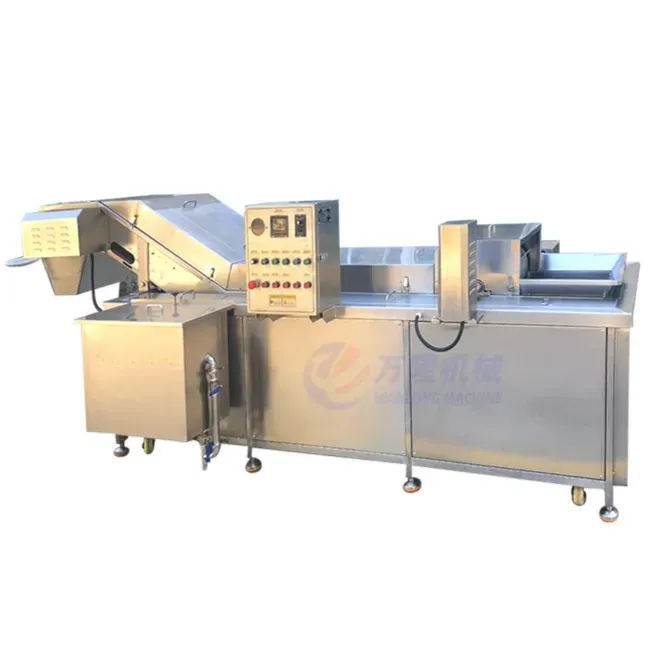
Modern food manufacturing is a major expense. Rising wages and labor shortages in vegetable processing plants and meat factories are impacting profit margins. The same question is asked by many factory owners: how can we reduce the cost of labor in food factory operations, without compromising quality or production capacity.
It’s good to know that reducing labor costs does not necessarily mean reducing the number of employees. In many successful factories the real solution lies in improving workflow, automation and production efficiency.
We help food processors reduce their operating costs by using smarter equipment, automated lines and efficient factory layouts.
Why Food Factories are Increasing Labor Costs
There are several challenges facing food factories in the world.
Minimum wage increases
Finding reliable workers is difficult
High Staff Turnover
Costs of training for new employees
Overtime expenses during peak season
Manual processes reduce productivity
Staffing requirements for hygiene compliance
Labor costs are a large part of many factories’ total operating costs, particularly where manual labor is still a big part of production.
How to reduce labor costs in food factories?
- Automate repetitive manual tasks
Replace repetitive tasks with machines to reduce labor costs.
Common examples:
Manual vegetable cutting – automatic vegetable cutter
Manual potato peeling – peeling machine
Hand washing product – bubble washer
Continuous fryer – manual frying
Automatic packaging machine – manual packaging
The case studies of automation in the food industry consistently show that labor savings and increased productivity can be achieved by replacing repetitive manual tasks.
The Best Equipment to Reduce Washing Labor
Ideal for central kitchens and fresh-cut factories, as well as vegetable processors.
- Use conveyor-based workflow
Often, factories waste time by moving products from one workstation to another.
By installing conveyors between machines, you can reduce the number of workers required to manually transport materials.
Examples:
Washer-cutter-dryer
Peeler – slicer – fryer
Meat cutter and packing station
Simple conveyors can often result in immediate savings.
- Upgrade to Multi-Functional Machines
Choose a system that combines steps instead of purchasing separate machines and separate operators.
Examples:
Peeling + Cutting Option
Apple Processing Option
The ROI can be dramatically improved by replacing three manual stations with one operator.
- Improve Factory Layout
A poor layout can increase walking time, wait times, and product congested.
The layout of the building should be designed to minimize unnecessary movements.
Raw materials receiving near the washing area
Cut near the cooking or packing area
Cold storage near finished goods
Clear staff movement paths
- Standardize Operating Procedures
Workers operate at different speeds, and the quality of their work is affected by the lack of clear SOPs.
Use standard instructions:
Machine Startup
Cleaning Process
Product loading quantity
Inspection checks
Packaging Sequence
Standardization can reduce errors and costs of retraining.
- Reduction of Product Waste and Rework
The cost of labor increases when workers are required to rewash, cut, repack or sort rejected goods.
Reduce:
Uneven cutting
Poor washing results
Incorrect package weight
Damaged Products
The least expensive labor hour is one that you don’t need to repeat.
- Cross-Training Employees
Train your workers to operate multiple stations
Washing Machine
Cutter
Packing line
Labeling Station
This allows for flexibility in scheduling during periods of high demand or absenteeism.
- How to measure productivity using data
Track:
Productivity per worker
Downtime Hours
Reject rate
Packaging speed
Orders per shift
When factories measure their productivity, they tend to improve more quickly than those that rely on guesswork.
Reduction in Labor Costs Example
Manual Vegetable Plant
8 Workers Washing
6 workers cutting
4 workers moving materials
Six workers are packing
Upgrade Plants with Automation
Two workers supervise a washing line
2 workers monitor cutter
1 forklift / conveyor flow
Four workers are packing
Even partial automation can result in significant monthly savings.
What machines usually give the fastest ROI?
These machines are often the most cost-effective for many food manufacturers.
Vegetable Washing Machine
Automatic cutter
Peeling machine
Continuous fryer
Packaging machine
Conveyor system
They replace repetitive work first.
Why Wanlong Machine is the first choice of buyers
Foshan Wanlong Machine Co., Limited helps customers reduce labor costs through practical engineering.
We have the following advantages:
Food machinery experience since 2016
Expertise in the processing of vegetables, fruits, and meat
Customized Factory Layout Planning
All-in-one equipment solutions
Energy-saving machine design
Export installation support
Production line integration experience
We are not only focused on machine sales, but also ROI.
Future Trends for Labor Saving Food Factories
Modern processors are increasingly demanding:
Touch screen PLC control
Automatic feeding systems
Robot packaging assistance
Inspection systems for vision
Remote Production Monitoring
Cleaning lines that save water
Modular expansion systems
Even medium-sized factories are becoming increasingly automated.
The conclusion of the article is:
The answer to how to reduce the labor cost of food factory operations is not to hire fewer workers, but to build a more intelligent system.
By automating repetitive work, improving layout, standardizing the workflow, reducing wastage, and upgrading key equipment, factories can reduce labor costs while increasing output and consistency.
We at Foshan Wanlong Machine Co., Limited, provide smarter, more efficient equipment that helps food processors grow profitably. We can design the best solution for you, whether it’s a single labor-saving machine or an automated production line.
The FAQ
- Which machine is the first to save labor?
The fastest labor saving is usually achieved by washing, cutting and packaging machines, because these tasks require many workers.
- Automation is only available in large factories
No. Partial automation can be a great investment for small and medium-sized factories.
- How quickly can equipment that saves labor pay for itself?
When labor costs are high, many factories can quickly recover their investment.
#FoodFactoryAutomation
#ReduceLaborCost
#FoodProcessingEquipment
#IndustrialEfficiency
#ProductionLineOptimization