


Blog
How we manufacture food processing machines
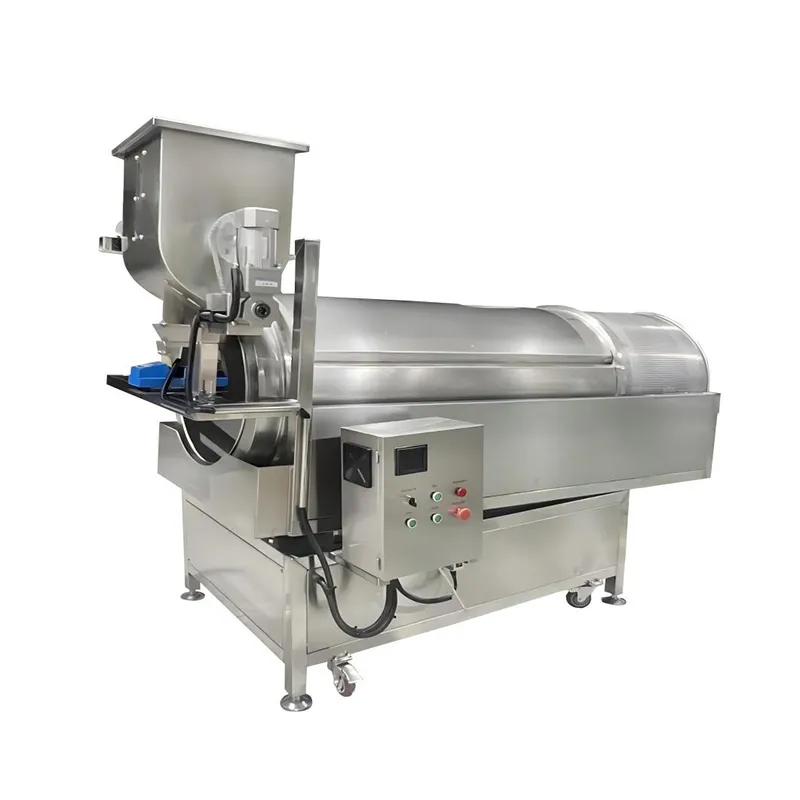
The machinery that you invest in will be the backbone of any food processing operation. It is important to know where and how the equipment is manufactured in order to predict its reliability and durability. This article will take you behind the scenes at a food machinery factory, showing the exact engineering, material selection and rigorous testing that defines a true manufacturer. This article will show you how a pure and focused philosophy of craftsmanship transforms stainless steel into high performance vegetable cutters, automated blanching lines, or complete central kitchen solutions. You can be confident that your production is built upon a foundation of excellence.
Buying machinery is an act that requires trust. A manufacturer is trusted to deliver tools that perform consistently, day after day under the harsh conditions of food processing. The markdown sheet can’t convey the quality of steel beneath a polished surface or the intelligence of a control system. You need to visit the factory in order to truly appreciate the value of an industrial frying line or a continuous vegetables washing line. Our identity as the purest deep-processing equipment manufacturer for food is not just a slogan. It is demonstrated in our manufacturing and assembly processes.
From Raw Material to Food Grade Foundation
Raw material testing is the first step in the lifestyle of each machine at our factory. Our equipment is exclusively designed for food contact. This is why we stock certified SUS304 stainless-steel in our material yard. It is chosen for its corrosion-resistant and non-reactive qualities, critical for acidic fruit or brined-meats. Each batch of steel is checked for thickness and composition upon arrival. We never compromise on this decision. The foundation of any meat-cutter or blanching-machine is heavy-duty, food-grade steel. Material integrity is directly related to the structural durability and hygiene of our machines.
Precision Fabrication: the Art of Laser Bending
The manufacturing heart starts to beat once the material is verified. The factory floor has been arranged to ensure a logical and efficient flow. It is dominated by CNC precision press brakes and advanced laser cutting machines. The laser cutting process is used to create every part. From the blades on a vegetable slicer to the panels of an electronic control cabinet. The computer-controlled cutting process eliminates dimensional drift and ensures every component is precisely cut. Our skilled press brake operators then form the flat steel sheets into the exact geometry required for machine frame, hoppers and chutes. The combination of high automation with experienced human oversight allows us to not only build individual machines but also seamlessly integrate them into full production lines, where the discharge from a peeling device must perfectly align with a washer’s intake.
Welding and Assembly: The Art of Craftsmanship
The welding of a machine determines its hygiene and longevity. Our welding stations are operated by artisans certified in TIG welding (Tungsten-Inert Gas). The results of their work are visible in the smooth, non-porous, and continuous joints, which do not allow bacteria to grow. This is a requirement for any environment that processes food. After fabrication, the parts are moved to assembly bays that cater to specific product groups. Our facility preassembles a vegetable processing line with a multistage washing machine, an air dryer and a blanching device. We are a “pure manufacturer”, which means we can design, manufacture, and assemble solutions all under one roof. Our engineers can solve integration problems on-the-spot, fine-tuning interfaces between mechanical, electric, and pneumatic system to provide a plug-and play experience for you.
Calibration and Intelligence Integration for Energy Savings
Modern food machines are an electromechanical symphony. Our electrical integration zone is meticulously wired up with international brands of inverters and PLCs. The brain of your equipment. Before final assembly, our engineering team tests and programs the control logic. To ensure precision, the temperature zones of an automated blanching system, the belt speed and cooking time can be simulated multiple times. Here we also realize our commitment to more efficient, smarter equipment. We optimize motor drives to maximize efficiency, design thermal insulation in frying and blanching equipment to minimize heat losses, and program smart start-stop sequences to contribute to significant operational savings over the long term for our clients.
The Final Test: Simulating your Production Reality
No machine leaves our facility without a thorough, live Factory Acceptance Test. We simulate real-world conditions, unlike a simple power on test. To verify the cut size and throughput of a vegetable cutter, we test it with real produce (carrots or lettuces), cabbages or cabbages. To calibrate temperature uniformity, we run a complete frying line with oil and test products to determine conveyor speed and temperature uniformity. We run the entire process, from washing to dry, for integrated central kitchen solutions to ensure mechanical harmony. All three components are connected in order to test the system. This extensive testing is our ultimate quality assurance, as it allows us to detect and correct any deviations before the machine is carefully packed and shipped to its destination.
The conclusion of the article is:
It is the quality of the materials used, the accuracy of the cut, the cleanliness and strength of the welds, as well as the final test that determine the true value of a machine for food processing. We invite you to visit our factory and reveal our commitment as the purest deep-processing equipment manufacturer. This commitment is both technical and ethical. Foshan Wanlong Machinery is based on the belief that reliable, hygienic and efficient machines are not accidents, but rather the predictable outcome of integrated engineering, deep specialization, and a commitment to quality. You are directly involved in the entire quality chain, from a certified sheet of steel to a production line that is humming with precision, when you partner with Foshan Wanlong Machinery.
FAQs (Frequently Asked Questions)
Q1: Is it possible to see a video of your factory before shipping?
A: Absolutely. We are committed to radical transparency. We will perform a detailed Factory acceptance test (FAT) in accordance with an agreed protocol prior to shipment. We can also provide a video detailing the procedure and showing the machine working according to your product specifications. We also welcome live video calls, where our engineer will walk you through your machine in the factory, showing all functions and answering any questions that you may have. The final step is your approval before crating.
Q2: How can I be sure that the machine in the video is the same as the one that I get?
Our manufacturing system guarantees this. We are a manufacturer of pure food machinery, so we control the entire production process, from the raw SUS304 Steel to the final assembly. Each machine is constructed using standardized fixtures, jigs and electrical architectures. Your machine is on our floor, it has been tested and will be shipped as soon as you approve. We don’t use a prototype to display, and then produce a cheaper version of the machine for delivery.
Q3: What are the best ways to control the quality of critical components such as motors and blades in a meat processor or vegetable cutter?
A: We have a strict, traceable supply chain in place for all sub-components that are critical. We use steel alloys that are verified and tested for precision wear parts such as cutting blades. We also perform tests on hardness and edge retention. We use motors and drive system brands that are internationally recognized. Each component is subjected to incoming quality controls, and we validate the entire assembly as a system in our final test. We run the cutter at full load, ensuring performance and safety.