

Blog
Best Vegetable Washing Machine for Commercial Use
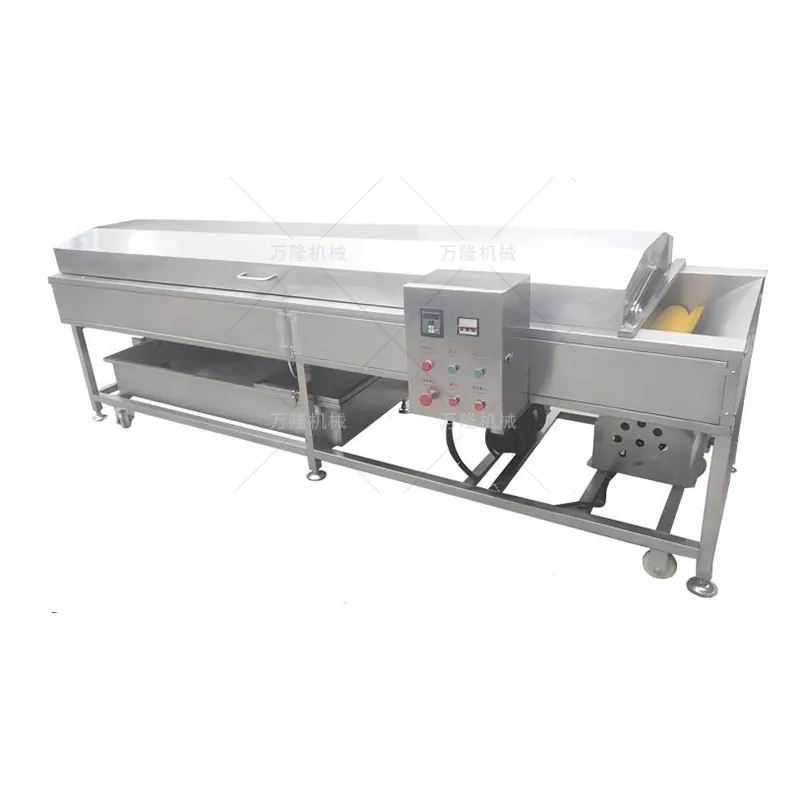
A commercial vegetable washing machine is far more than a simple rinse station; it is a precision instrument that determines the cleanliness, shelf life, and visual appeal of fresh produce in large-scale operations. Whether you run a central kitchen, a fresh-cut salad facility, or a frozen vegetable plant, selecting the right washing system directly impacts food safety, throughput, and labor costs. This guide unpacks the critical features that define a best-in-class commercial vegetable washer—from material integrity and washing technology to energy efficiency and integration potential. Discover how Foshan Wanlong Machinery, as a pure food deep processing equipment manufacturer, engineers washing solutions that deliver spotless produce with unmatched gentleness and hygiene.
For any commercial food business handling fresh vegetables, the washing machine is the first active step in the processing chain. It receives raw, field-harvested produce bearing soil, insects, pesticide residues, and natural waxes, and must output a spotlessly clean product ready for cutting, cooking, or packaging. Yet not all vegetable washing machines are created equal. A poorly designed washer can bruise delicate greens, waste enormous volumes of water, or fail to remove stubborn debris from root vegetables, leading to consumer complaints or failed audits. Choosing the best commercial vegetable washing machine means evaluating build quality, washing mechanism, capacity, sanitary design, and the manufacturer’s ability to customize the machine to your specific produce portfolio. Foshan Wanlong Machinery, with deep specialization in fruit and vegetable processing equipment, brings all these answers together.
Why a Dedicated Commercial Vegetable Washer Matters
Manual washing in sinks or tubs cannot scale. It is labor-intensive, inconsistent, and nearly impossible to validate for modern food safety standards. A properly engineered vegetable washing machine introduces automation, repeatability, and measurable hygiene. Through controlled water flow, air agitation, and conveyor speed, every leaf, root, or fruit piece receives the same predetermined treatment. This consistency is essential for HACCP documentation and for meeting the requirements of retail chains and export regulators. Moreover, a high-capacity washer eliminates the time and labor bottleneck, directly increasing your facility’s throughput while freeing staff for higher-value tasks.
Key Features of a Best-in-Class Vegetable Washing Machine
Food-Grade Material Construction: The entire washing chamber, tank, piping, and conveyor must be fabricated from SUS304 stainless steel. This alloy resists corrosion from water, mild acids in vegetables, and cleaning chemicals commonly used in sanitation cycles. Continuous, polished TIG welds prevent bacterial harborage, and a self-draining tank design ensures no standing water remains after cleaning. Wanlong’s washers are built from certified SUS304 steel, delivering structural longevity and hygienic integrity that satisfy FDA, CE, and other international guidelines.
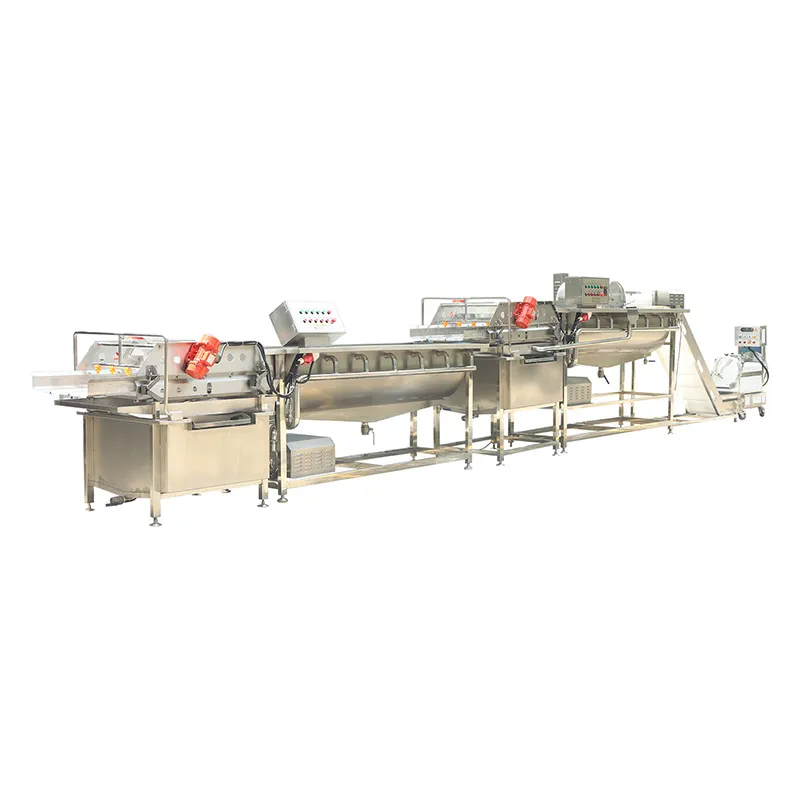
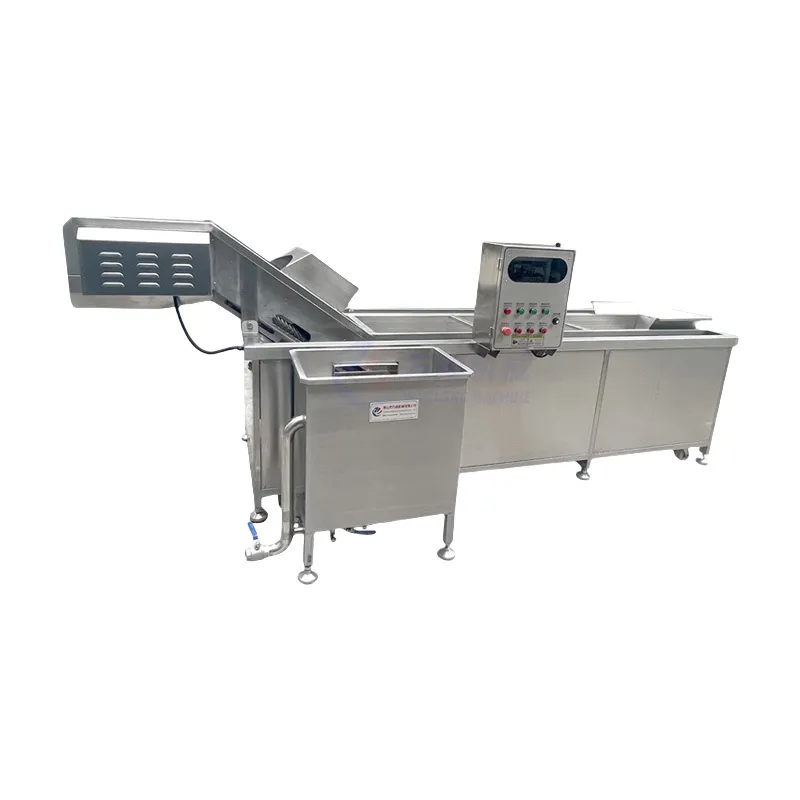
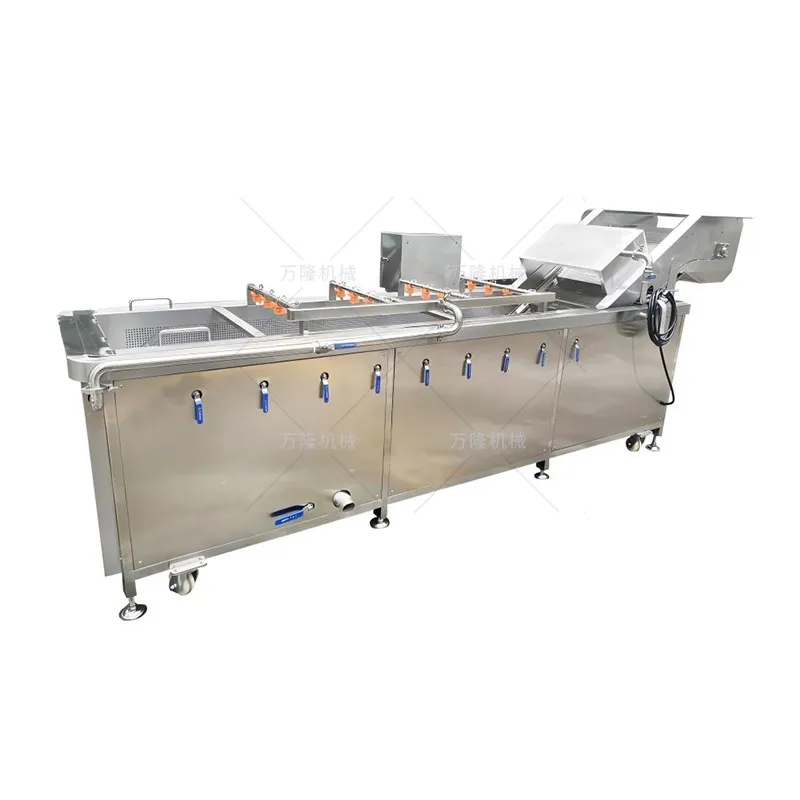
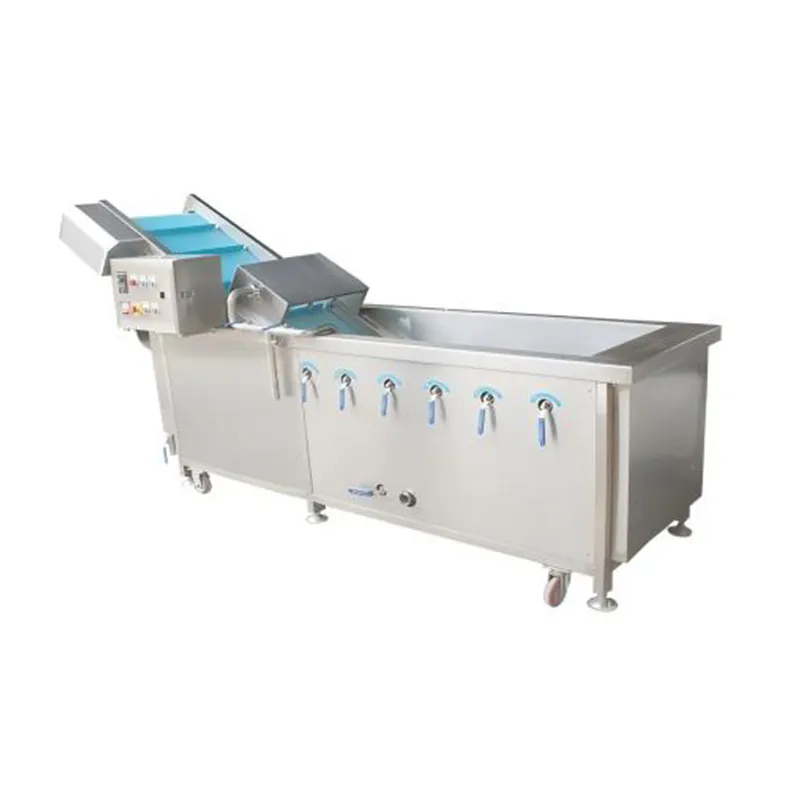
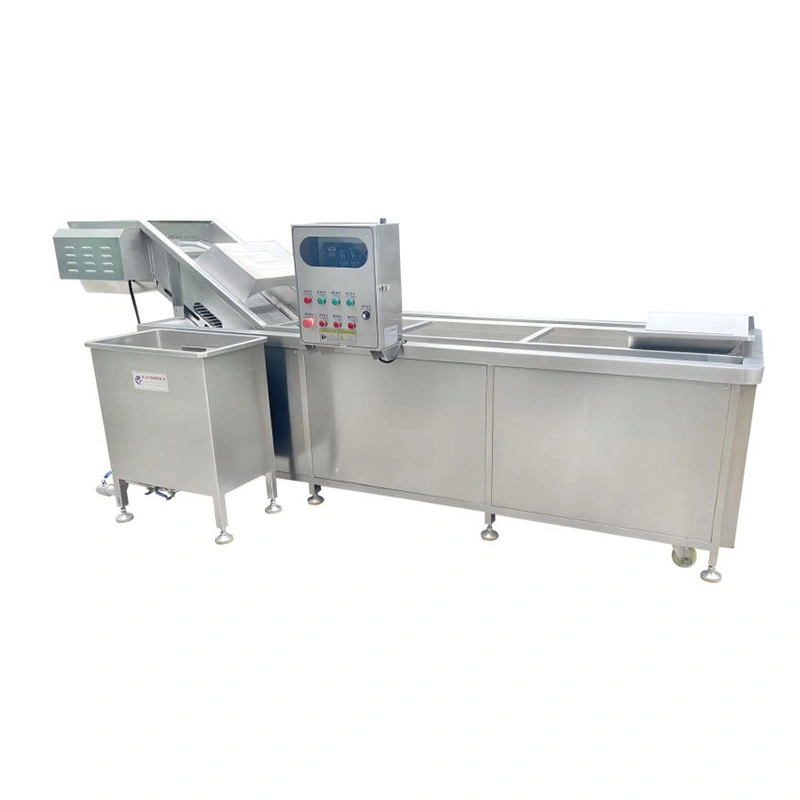
Bubble Washing Technology for Gentle Effectiveness: The most effective commercial vegetable washers use a combination of water immersion and precisely injected air bubbles. Millions of micro-bubbles rise through the water column, creating a scrubbing action that loosens dirt from leaf surfaces and crevices without mechanical abrasion. This is particularly critical for delicate products like spinach, arugula, and fresh herbs. Our bubble washing machines feature adjustable air-injection intensity, allowing operators to select a vigorous clean for dirty potatoes or a gentle cycle for soft lettuce—all from the control panel.
Multi-Stage Design with Spray Rinse: A single wash may not suffice for heavily soiled produce. The best systems incorporate both a submersion bubble-wash section and a subsequent high-pressure spray rinse zone. After emerging from the tank, vegetables pass under a bank of spray nozzles that dislodge any remaining debris and begin the surface moisture reduction process. This multi-stage approach maximizes cleaning efficacy while minimizing water consumption through recirculation and filtration. Wanlong provides integrated washing lines that combine soaking, bubbling, and spraying in one seamless machine.
Adjustable Throughput and Speed Control: Different vegetables require different residence times in the wash tank. A leafy green may need only 30 seconds, while a dense root might require two minutes of agitation. Variable-frequency drives on the conveyor belt allow precise speed adjustment, ensuring the product stays in the cleaning zone for exactly the right duration. This flexibility enables a single machine to process a diverse product mix with quick parameter changes.
Energy-Saving and Water Recycling Capability: Commercial operations cannot ignore utility costs. The best washing machines incorporate water filtration and recirculation systems that reduce freshwater intake dramatically. A rotary drum filter or wedge-wire screen removes suspended solids, allowing clean water to be reused for the initial soak phase. Wanlong designs energy and resource efficiency into every machine, including low-energy air blowers and heat recovery where hot water washing is required.
Customization: The Wanlong Advantage
No two vegetable processors handle the exact same produce mix. A machine optimized for carrots and potatoes will not automatically suit baby lettuce or fresh herbs. That is why Wanlong approaches every washing project as a tailored solution. We configure tank dimensions, belt type (open mesh for heavy debris, flat belt for delicate items), bubble intensity profile, and spray nozzle layout to match your specific raw materials. If your operation processes both root vegetables and leafy greens, we can engineer a multi-zone machine with independently controlled washing sections. This depth of customization, born from our identity as a pure food deep processing equipment manufacturer, ensures the machine you receive is purpose-built for your product, not a compromised standard model.
Integration into Complete Processing Lines
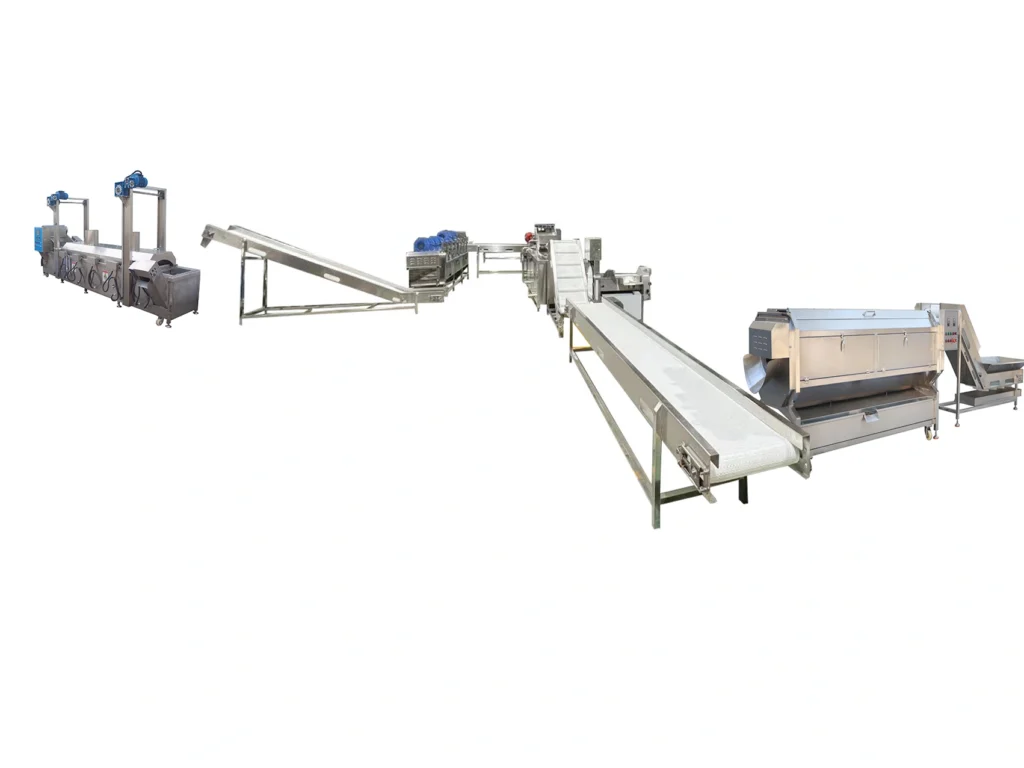
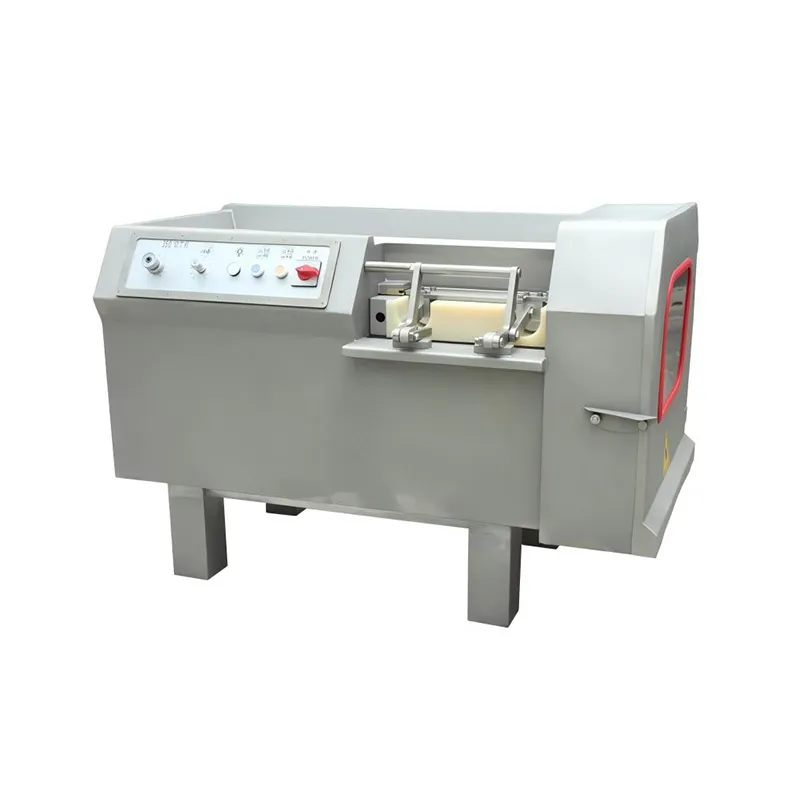
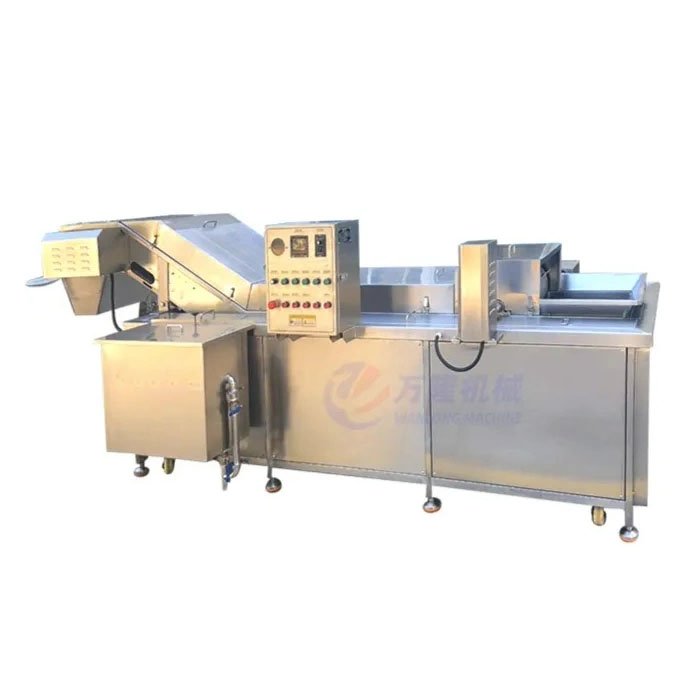
A vegetable washing machine rarely works in isolation. It must feed product into peeling machines, vegetable cutters, blanching machines, or air dryers. Wanlong’s washing solutions are designed from the start as modular units that integrate seamlessly into larger turnkey lines. We engineer mechanical interfaces and control logic that synchronize with downstream equipment, making your entire pre-freezing, fresh-cut, or central kitchen line a unified, automatic flow. This eliminates transfer labor and ensures that clean vegetables are not re-contaminated before the next step.
Conclusion
The best commercial vegetable washing machine is one that speaks to your exact product and production reality. It must be built from hygienic stainless steel, employ gentle yet thorough bubble and spray technology, offer precise speed control, and integrate smoothly into your broader process. More critically, it must come from a manufacturer willing to customize every detail to your operation. Foshan Wanlong Machinery delivers this exact combination of quality, flexibility, and dedicated food processing expertise. Whether you need a single stand-alone washer or a complete washing line as part of a new central kitchen or frozen factory, we are ready to engineer a solution that sets the highest standard of cleanliness for every vegetable that passes through your facility.
Frequently Asked Questions (FAQ)
Q1: Can a bubble washing machine effectively clean heavy soil from root vegetables like potatoes and carrots without damaging them?
A: Yes. The beauty of a bubble washing system is its adjustability. For heavy-soil root vegetables, we increase the air injection intensity to create vigorous agitation that scours the surface and dislodges mud from eyes and crevices. The product-on-belt design ensures the tubers are not smashed against each other. A two-stage wash with a secondary spray rinse can be configured to achieve pristine cleanliness. The same machine can then be adjusted to a gentle bubble flow for more delicate items.
Q2: How do I clean and sanitize the inside of the washing machine between batches to prevent cross-contamination?
A: Our machines are designed for efficient clean-in-place (CIP) and rapid sanitation. The tank features a full-drain slope, and the belt is often tool-free removable or liftable for direct access. All internal surfaces are polished SUS304 stainless steel with continuous, crevice-free welds, so no debris traps exist. We provide detailed sanitation procedures, and optional integrated CIP spray balls can automate the internal rinse cycle, allowing a sanitation crew to clean the machine thoroughly during a shift change.
Q3: What are the typical water consumption and utility requirements, and can your machines recycle water to save costs?
A: Water consumption depends on product soil load and machine size. Crucially, we offer water recirculation systems that filter and reuse a significant portion of the wash water, dramatically reducing fresh water intake. A wedge-wire or rotary drum filter removes solids, and a recirculation pump sends clean water back to the initial soak zone. We calculate the expected utility requirements—water, electricity, compressed air—during the quotation phase, and our energy-saving design principles ensure the machine’s running costs are contained over its lifetime.
#CommercialVegetableWashingMachine
#BubbleVegetableWasher
#IndustrialVegetableCleaner
#StainlessSteelWasher
#FoodProcessingWashLine